
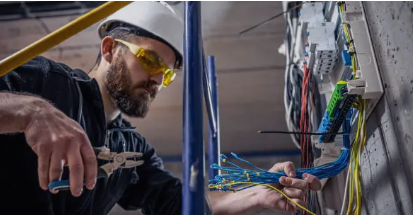
The electrical trade is evolving rapidly, and professionals who want to stay competitive must adapt to emerging tools and digital systems. In Hackney, SA, demand for safer, faster, and more efficient electrical services continues to grow across residential upgrades, commercial developments, and smart home installations. For any electrician Hackney working in today’s environment, familiarity with modern diagnostic equipment and digital technologies is no longer optional—it is essential for compliance, productivity, and safety.
This article explores the most important tools and technologies shaping the industry, from advanced testing devices to software-driven workflow systems that are redefining how electricians plan, diagnose, and deliver electrical work.
Advanced Diagnostic Tools Reshaping Field Efficiency
Modern electricians rely heavily on precision tools that reduce guesswork and improve fault-detection accuracy. Traditional manual testing has largely been supplemented by intelligent diagnostic devices that provide real-time data and analytics.
Key tools include:
● Digital multimeters with auto-ranging and Bluetooth connectivity
● Clamp meters for non-invasive current measurement
● Insulation resistance testers for cable integrity checks
● Non-contact voltage detectors for rapid safety verification
● Circuit tracers for identifying hidden wiring faults
These tools significantly reduce troubleshooting time and increase job site safety. Thermal imaging cameras are also becoming standard, allowing electricians to detect overheating circuits, overloaded switchboards, and hidden faults behind walls without destructive testing.
For any electrician Hackney working in both older homes and modern developments, these tools are critical for bridging legacy electrical systems with contemporary compliance standards.
Smart Technologies and Digital Workflow Integration
Beyond physical tools, software and connected systems are transforming how electricians manage their work. Mobile-based job management platforms now allow electricians to receive work orders, update job progress, and generate compliance documentation directly from the field.
Common technologies include:
● Cloud-based job scheduling and dispatch systems
● Digital compliance reporting tools aligned with Australian standards
● Mobile apps for circuit design and load calculation
● Augmented reality (AR) for layout planning and troubleshooting
● Smart power quality analysers for monitoring harmonic distortion and load imbalance
The installation of electric vehicle (EV) infrastructure is also driving the adoption of specialised testing devices and load management software. As more properties in Hackney, SA adopt solar systems and battery storage, electricians must also be familiar with photovoltaic diagnostic tools and energy monitoring platforms.
The integration of these systems reduces administrative workload while improving accuracy and regulatory compliance. For an electrician Hackney, adopting these technologies is increasingly tied to competitiveness in both residential and commercial markets.
Smart Home, IoT, and Energy-Efficient System Tools
Modern electrical work is no longer limited to wiring and repairs—it now includes smart home integration and energy optimisation systems. Electricians are expected to install and configure interconnected devices that communicate across networks.
These systems require electricians to understand both electrical infrastructure and basic networking principles. In Hackney’s growing residential developments, smart home installations are becoming a standard expectation rather than a premium add-on.
Site Safety, Compliance, and Emerging Field Technologies
Safety remains the cornerstone of electrical work, and new technologies are enhancing how risks are managed on-site. Wearable safety devices, such as smart helmets and sensor-equipped vests, can now monitor environmental conditions like heat exposure, voltage proximity, and fatigue levels.
Other emerging technologies include:
● Portable arc fault detection systems
● Digital lockout/tagout management tools
● GPS-enabled site mapping for underground cable detection
● Laser distance meters for precise installation planning
● Cloud-based safety checklists and audit systems
These innovations are particularly useful in mixed urban-regional areas like Hackney, SA, where electricians often work across a combination of older infrastructure and new construction sites.
The adoption of these tools helps reduce workplace incidents while improving the accuracy of documentation during inspections and audits.
Future Trends Shaping the Electrical Industry
The electrical industry is moving toward deeper integration with renewable energy systems and intelligent infrastructure. Electricians will increasingly work with AI-assisted diagnostic platforms, predictive maintenance systems, and fully automated energy grids.
Some key trends include:
● AI-driven fault prediction in residential and commercial systems
● Expansion of EV charging networks requires advanced load balancing tools
● Greater reliance on digital twin modelling for building electrical systems
● Increased use of robotics in high-risk electrical maintenance tasks
● Full integration of smart grid technologies with household systems
In regional hubs like Hackney, SA, these advancements will gradually reshape how electrical services are delivered. The demand for multi-skilled professionals who understand both traditional wiring and digital systems will continue to rise.
For an electrician in Hackney, staying updated with these technologies is not just a career advantage—it is a requirement for long-term relevance in a rapidly modernising industry.
Conclusion
Electrical work is undergoing a significant transformation driven by digital tools, smart technologies, and renewable energy systems. From advanced diagnostic devices to AI-supported workflow platforms, the modern electrician must be both a skilled tradesperson and a technology-literate professional.
In Hackney, SA, this evolution is especially visible as homes and businesses adopt smarter, more efficient electrical systems. Electricians who invest in learning and adopting these technologies will be best positioned to meet future demand, improve service quality, and maintain strong compliance standards across all project types.